
‘Stranger Things’ Finale Collides With Outrage Over Cast’s Zionist Views
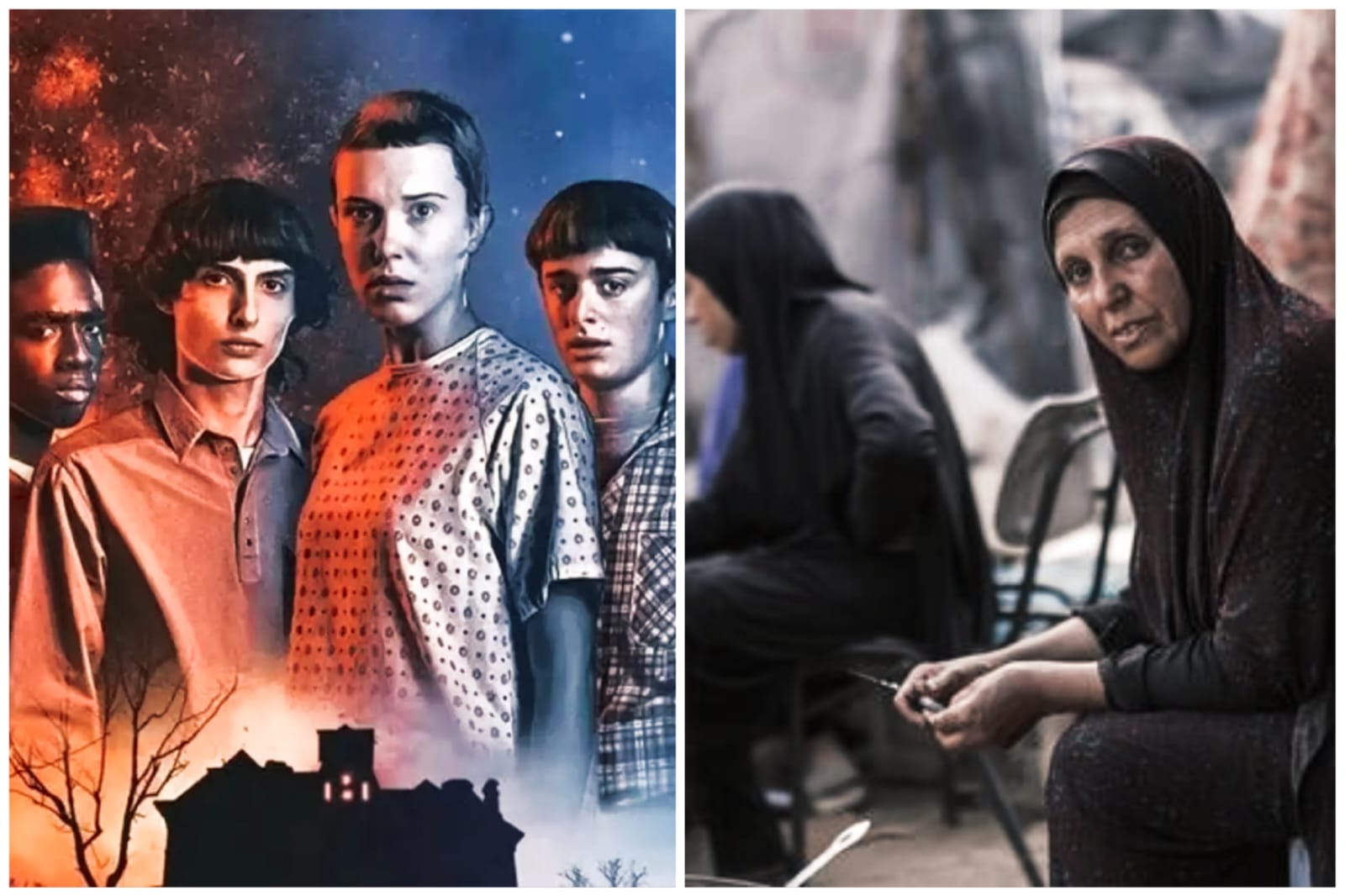
As the fifth and final season of Stranger Things arrives, the anticipation that once defined the series has been replaced with something far more complicated.
The show that once united global audiences in nostalgia and supernatural escapism now lands in the middle of a fierce cultural and political storm. Not because the Upside Down is back — but because two of its stars publicly embraced Zionist slogans while Palestinians faced a mounting humanitarian catastrophe in Gaza.
The central question is no longer how the Hawkins crew will survive. It is whether fans can, with clear conscience, continue to support a franchise whose cast has aligned itself with a state accused of committing genocide.
Zionism in the Spotlight — and Silence from the Rest of the Cast
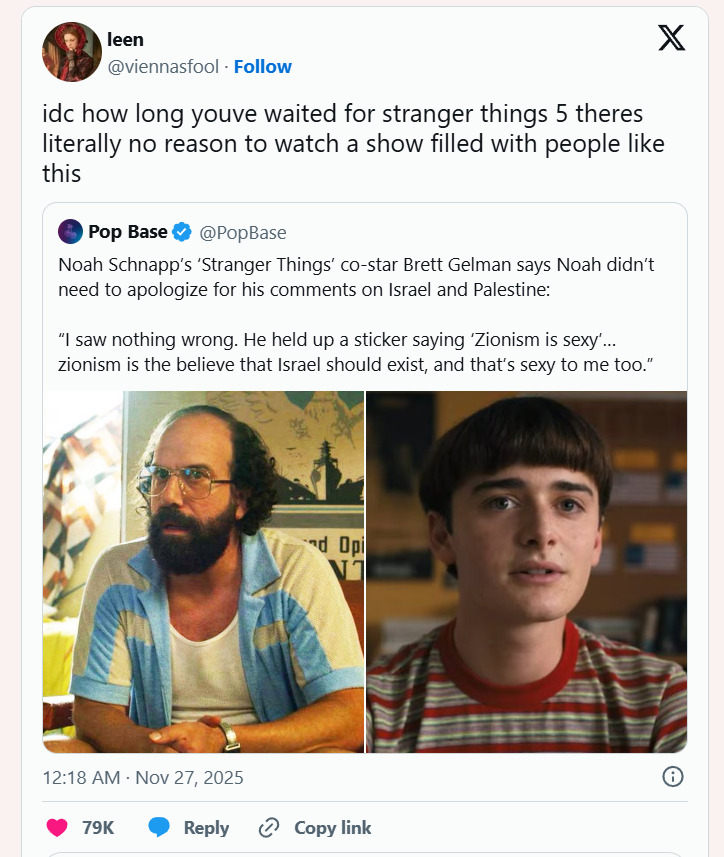
The controversy reached a boiling point after Noah Schnapp, who plays Will Byers, shared a post shortly after October 7 expressing unwavering support for Israel.
He described Hamas attacks as “senseless brutality” and urged people to “stand with Israel,” offering no acknowledgment of the decades of occupation or the spiraling civilian death toll in Gaza.
That initial statement might have sparked debate on its own — but the real fury came later.
A video circulated showing Schnapp among people holding stickers reading “Zionism is Sexy” and “Hamas is ISIS.”
For audiences already shaken by images emerging daily from Gaza — children pulled from rubble, families starving, entire neighborhoods erased — the clip felt callous and dehumanizing. The backlash was immediate.
Brett Gelman, who plays Murray Bauman, then publicly defended Schnapp and echoed similar Zionist talking points.
He dismissed criticism as antisemitic, doubled down on slogans many interpreted as dismissive of Palestinian suffering and framed opposition to Zionism as hatred of Jews.
His stance inflamed tensions further, cementing a growing divide between the show’s global fan base and the cast members who appeared indifferent to the unfolding devastation.
Meanwhile, other cast members remained silent.
No leading actor issued a statement condemning Israel’s airstrikes, the mass displacement, or the rising civilian death toll, and no one called for a ceasefir
The Boycott Movement
The fandom surrounding Stranger Things is enormous — from watch parties to global red-carpet events to unprecedented streaming numbers.
But in recent months, many of those same fans have turned away from celebration and toward protest.
Online campaigns calling for a boycott have gained momentum. Some viewers say they can no longer separate entertainment from morality.
Others argue that watching the show feels like endorsing the dismissal of Palestinian suffering.
A growing number have canceled their Netflix subscriptions and vowed not to engage with the final season at all.
The movement is not rooted in a single incident. It reflects a broader reckoning across entertainment industries, where public figures are increasingly expected to speak out against human rights abuses.
In the case of Stranger Things, critics argue that the cast’s political remarks and silence together contribute to a culture that normalizes violence against Palestinians.
Copyright © AMT Inc. All rights reserved 2024.