
Trump Administration Pulls US Out of UN Climate Framework and Dozens of Global Institutions
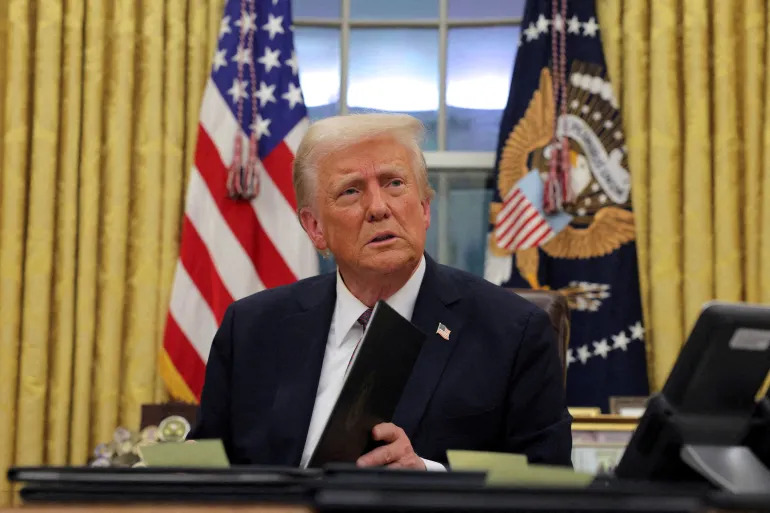
The United States has announced its withdrawal from 66 international organizations, including the world’s central climate bodies, marking one of the most far-reaching retreats from global cooperation in recent US history.
The decision, signed by President Donald Trump this week, pulls the US out of key institutions such as the UN Framework Convention on Climate Change (UNFCCC) and the Intergovernmental Panel on Climate Change (IPCC), along with dozens of UN and non-UN organizations working on climate, development, democracy, gender equality, peacebuilding, and security.
The White House said these bodies “no longer serve American interests” and accused them of promoting “ineffective or hostile agendas” that undermine US sovereignty and economic strength.
“These withdrawals will end American taxpayer funding and involvement in entities that advance globalist agendas over US priorities,” the administration said, describing the organizations as “a waste of taxpayer dollars” and critical of what it called “radical climate policies, global governance and ideological programs.”
Nearly half of the affected bodies are part of the UN system. Beyond climate institutions, the list includes agencies focused on children in armed conflict, sexual violence, development, trade, gender equality, oceans, water, population, and peacebuilding. The administration has also ordered withdrawal from 35 non-UN organizations, including the International Renewable Energy Agency, the International Solar Alliance, the International Union for Conservation of Nature, and several forums on democracy, migration, and security.
The withdrawal from the UNFCCC is particularly significant. Adopted in 1992 and ratified by the US Senate, the treaty forms the legal foundation for all international climate negotiations, including the Paris Agreement.
While the US is already in the process of leaving the Paris Agreement for a second time, a move that will take effect in January 2026, the new memorandum goes further by targeting the entire climate framework itself.
UNFCCC Executive Secretary Simon Stiell warned that the move would directly harm the US. “While all other nations are stepping forward together, this latest step back from global leadership, climate cooperation and science can only harm the US economy, jobs and living standards,” he said.
He added that the decision would leave the country “less secure and less prosperous,” with higher costs for energy, food, transport, and insurance as climate-driven disasters intensify.
European leaders echoed those concerns. EU climate commissioner Wopke Hoekstra said the UNFCCC “underpins global climate action” and called the US withdrawal “regrettable and unfortunate.” Teresa Ribera, the EU’s vice president for clean transition, said the decision showed little concern for the environment, public health, or human suffering, while stressing that Europe would continue to support international climate research and cooperation.
Scientists and advocacy groups also raised alarms about the impact on global research. Sources within the IPCC told the BBC they are concerned about restrictions on US scientists, noting that the administration has already blocked US researchers from attending international meetings. Such limits could delay major IPCC reports, including its mitigation assessment that guides governments on cutting emissions.
Rachel Cleetus of the Union of Concerned Scientists described the decision as “a new low.” She said it was “another sign that this authoritarian, anti-science administration is determined to sacrifice people’s well-being and destabilize global cooperation.” Speaking separately, Cleetus added that the administration’s actions are “utterly unhelpful to U.S. and global climate progress right now—and deeply against the interests of the American people.”
The administration has defended its position by arguing that many of the organizations promote diversity, equity, and inclusion initiatives and climate policies that “actively seek to constrain American sovereignty.” Secretary of State Marco Rubio said the US would not continue to invest “resources, diplomatic capital, and the legitimizing weight of our participation” in institutions it sees as conflicting with national interests.
Legal experts say the decision is likely to face challenges, especially regarding Senate-ratified treaties like the UNFCCC. Maria Ivanova of Northeastern University noted that while the Constitution requires Senate approval to enter treaties, it is silent on how to exit them. “This could be the case that finally forces the courts to decide whether unilateral presidential withdrawal is constitutional or requires congressional involvement,” she said.
Despite the scale of the withdrawal, the US will remain part of some UN bodies deemed essential to security and humanitarian interests, including the UN Security Council, the World Food Programme, and the UN Refugee Agency.
Former officials and analysts warn that the broader consequences may extend beyond diplomacy. Former US climate envoy John Kerry has described the move as a “gift to China,” which already dominates large parts of the global clean-energy market. Andy Miller, a former senior science adviser at the US Environmental Protection Agency, said that while the exit would be damaging to US influence, it could allow other countries to push stronger climate action without US resistance. “Other countries will likely take advantage of the absence of the US to maximize their advantages in clean energy and climate leadership,” he said.
For now, the withdrawals underscore a sharp shift in US foreign policy, away from multilateral engagement and toward a narrower definition of national interest. As climate impacts worsen globally, critics argue that the decision isolates the US at a moment when collective action is becoming increasingly urgent.
Copyright © AMT Inc. All rights reserved 2024.