
Japan’s First Female Prime Minister Backs Call for More Women’s Toilets in Parliament
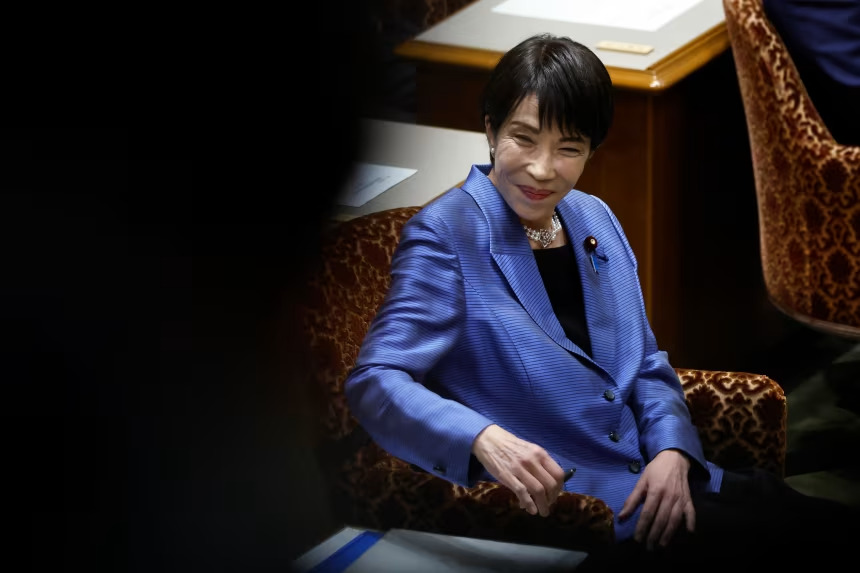
Japan’s parliament is facing an unexpectedly basic problem as women gain more seats: there are not enough toilets for them to do their jobs without disruption.
Prime Minister Sanae Takaichi has joined more than 50 female lawmakers in formally petitioning for additional women’s restrooms in the National Diet building, arguing that long queues are now interfering with parliamentary work. The cross-party appeal, submitted in December, points to a stark imbalance in facilities that reflects how Japan’s political infrastructure has failed to keep pace with even modest gains in female representation.
At the heart of the issue is the House of Representatives, where 73 women currently serve. Near the main plenary chamber, there is only one women’s restroom with two cubicles available to them. Across the entire lower house building, there are nine women’s toilets with a total of 22 cubicles, compared with 12 men’s toilets offering 67 stalls.
“Before the main assembly session, a truly large number of female lawmakers line up in front of the women’s restroom,” said Yasuko Komiyama of the opposition Constitutional Democratic Party. She described the situation as routine rather than exceptional, particularly ahead of key sessions.
The petition, backed by 58 lawmakers from seven political parties and independent groups, warns that the shortage is “a critical issue that could potentially impact the conduct of proceedings and the performance of duties.” According to the lawmakers, the problem extends beyond elected officials to female parliamentary staff and a growing number of women journalists working in the building.
Komiyama has also stressed that the queues are not just an inconvenience but a visible sign of deeper structural inequality. “In a way, this symbolises how the number of female lawmakers has increased,” she said, adding that she hoped the issue would push broader conversations about equality in Japanese society.
Another opposition lawmaker, Tomoe Ishii, said the shortage of women’s toilets “has long been an issue,” but is rarely raised openly. “There is a prevailing reluctance to raise the issue of adding more women’s restrooms in workplaces and schools within society,” she said, pointing to a wider cultural hesitation to address women’s needs in public spaces.
The building itself explains part of the problem. Completed in 1936, the National Diet predates women’s suffrage in Japan by nearly a decade. Japanese women gained the right to vote in 1945, with the first female lawmaker elected the following year. The layout of the parliament, designed for an overwhelmingly male political class, has changed little since then.
Despite recent progress, women remain a small minority in Japanese politics. They hold just under 16 percent of seats in the 465-member lower house. In the most recent election, 73 women were elected, up from 45 in the previous parliament, while there are 74 women in the 248-seat upper house. The government’s stated goal is for women to eventually occupy at least 30 percent of legislative seats.
Japan’s global standing underscores the scale of the challenge. The country ranks 118th out of 148 nations on the World Economic Forum’s Global Gender Gap Index, reflecting persistent gaps not only in politics but also in business and media. Female candidates have reported facing sexist remarks during campaigns, including being told they should stay home to look after children.
Takaichi’s support for the petition has drawn particular attention. Elected in 2025 as Japan’s first female prime minister, she has spoken publicly about women’s health issues, including her own experience with menopause, and has said she wants to see greater female participation in public life. At the same time, she is widely viewed as socially conservative and has faced criticism for appointing only two women to her 19-member cabinet.
The push for more toilets, while modest in scope, has come to represent a larger contradiction in Japanese politics: incremental progress for women colliding with institutions and norms that remain firmly rooted in a male-dominated past. As Komiyama put it, the growing demand for women’s restrooms is both “a sign of progress” and a reminder of how far Japan still has to go to achieve genuine gender equality.
Copyright © AMT Inc. All rights reserved 2024.