
Rewiring the Mind: Rachelle McCloud on Healing Trauma and Transforming Mental Health
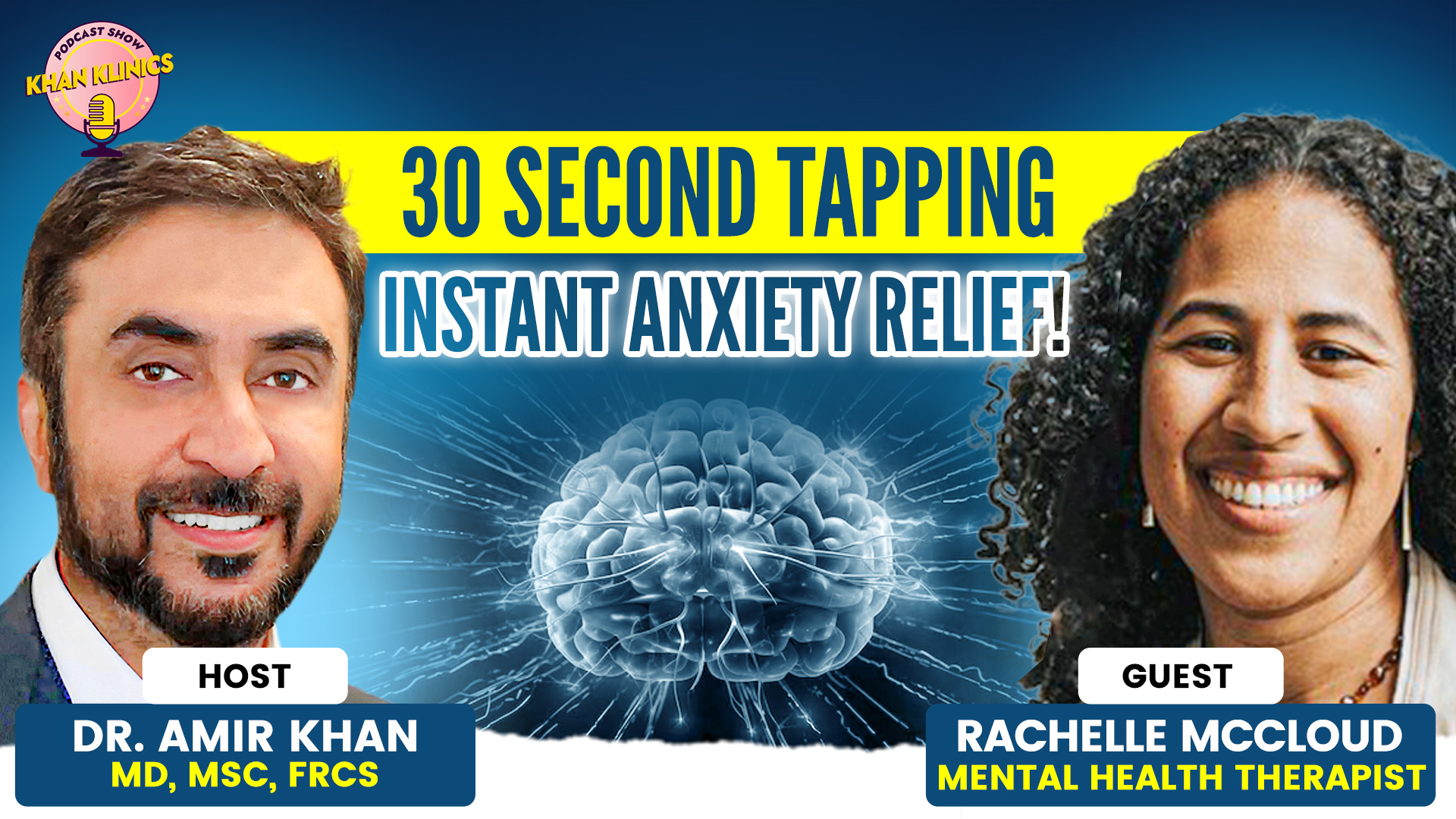
In a world where depression is on track to become the leading global illness burden by 2030, mental health conversations are more vital than ever. In a recent episode of the “Khan Klinics” podcast, hosted by Dr. Amir Khan in collaboration with American Muslim Today (AMT), an extraordinary guest whose life’s work is quietly revolutionizing emotional wellness was featured, Rachelle McCloud, LCSW.
McCloud is not just a licensed clinical social worker and emotional wellness coach, she's a survivor turned healer. With over two decades of experience
and certifications in Thought Field Therapy (TFT) and Eden Energy Medicine (EEM), McCloud has developed an integrative approach that combines neuroscience, traditional therapy, and energy-based modalities. The result? A healing path that doesn’t just suppress symptoms, but teaches people how to rewire their minds to heal from within.
A Personal Crisis Turned Purpose
McCloud’s journey into emotional wellness didn’t begin in a classroom, it began in crisis. “I left the field pretty angry,” she confessed, recounting her early disillusionment with traditional therapy.
What pushed her away wasn’t apathy but a hunger for real healing. After facing her mental health crisis, diagnosed with obsessive-compulsive disorder (OCD) postpartum, she found herself seeking unconventional help.
That help came from an “alternative” practitioner who introduced her to Emotional Freedom Techniques (EFT). Using EFT, she experienced the kind of transformation that medication and talk therapy hadn’t offered.
 Rachelle McCloud
From Survivor to Guide
When Dr. Khan asked, “How do you identify people who need this kind of support?”
McCloud responded with clarity: “I help brains work the way they’re meant to.” Whether it’s anxiety, trauma, or a sense of being stuck, her approach addresses the brain’s core survival mechanisms. Often, clients can’t pinpoint the problem themselves. “They just come to me with their brain function and say, ‘Fix this,’” she shared.
She broadly classifies these challenges as anxiety, depression, trauma, and complex PTSD—conditions she believes often originate in early environments that lacked emotional safety.
Her work focuses on helping individuals process the unresolved emotional experiences their developing brains couldn’t handle at the time.
What Healing Looks Like
One of the most enlightening parts of the conversation came when Dr. Khan asked about how she differentiates between “coaching” and “therapy.” Coaching clients, McCloud explained, are often people on a growth journey, spiritually, emotionally, and professionally.
Therapy, on the other hand, deals more with trauma and disorder. Yet both pathways begin with teaching clients how to support their own brain’s healing.
And the technique at the center of it all? Emotional Freedom Techniques.
In simple terms, EFT involves tapping on acupressure points while thinking about a distressing issue. “The brain doesn’t have a problem with problems,” McCloud emphasized.
“It has a problem with how we feel about those problems.” When emotions trigger the brain’s survival response, fight, flight, freeze, EFT signals to the survival system that it’s safe to relax and process.
Dr. Khan drew a parallel with the nervous system, the goal is to shift from a sympathetic (stress) state to a parasympathetic (healing) state.
McCloud agreed, illustrating how EFT works in real-life scenarios, like a parent calming themselves before reacting to a child’s behavior. “Just by getting the brain to change, we can change the generational patterns,” she added.
The Science of Safety
Another powerful technique McCloud employs is EMDR, ‘Eye Movement Desensitization and Reprocessing’. In response to Dr. Khan’s inquiry about its application, she described how EMDR uses bilateral stimulation, eye movements, tapping, or sounds to reprocess traumatic memories.
“All we need is attention and intervention,” she said, emphasizing that a regulated brain state is essential for healing.
Whether it’s EFT or EMDR, McCloud explains that these tools help the brain feel safe enough and supported enough to process pain, and that is transformational, because without enough processing support, even the most cutting-edge therapy is ineffective.
When Is Healing "Done"?
Dr. Khan then asked the golden question: How do you know when healing has occurred?
McCloud’s answer was both scientific and intuitive. It starts when the right intervention causes even a 30-second shift in how the brain processes. Symptoms like panic attacks begin to fade. Behavior, beliefs, and subconscious reactions begin to align. Healing, she said, shows up not only in how a person feels, but in how they act, think, and relate.
And the timeline? “You can move through a disorder in two to six months,” she assured listeners, contrary to the belief that therapy takes forever.
The Future of Emotional Wellness
When asked about what lies ahead for mental health, McCloud offered a hopeful yet pragmatic view. While emerging therapies and AI hold promise, especially in aiding self-expression, she emphasized that true healing still depends on working with the body’s survival system.
“If we don’t get the symptoms of anxiety and depression out of the body, we do not resolve this,” she affirmed.
Ultimately, she reminded us: no tool, no matter how advanced, can replace the need to reconnect with ourselves, mind, body, and spirit.
For a fresh, science-backed take on health and well-being, subscribe to Khan Klinics, powered by AMT. Stay informed and empowered.
Copyright © AMT Inc. All rights reserved 2024.