
French Muslim Council Rejects Ifop Poll Over Biased Methods and Harmful Narratives
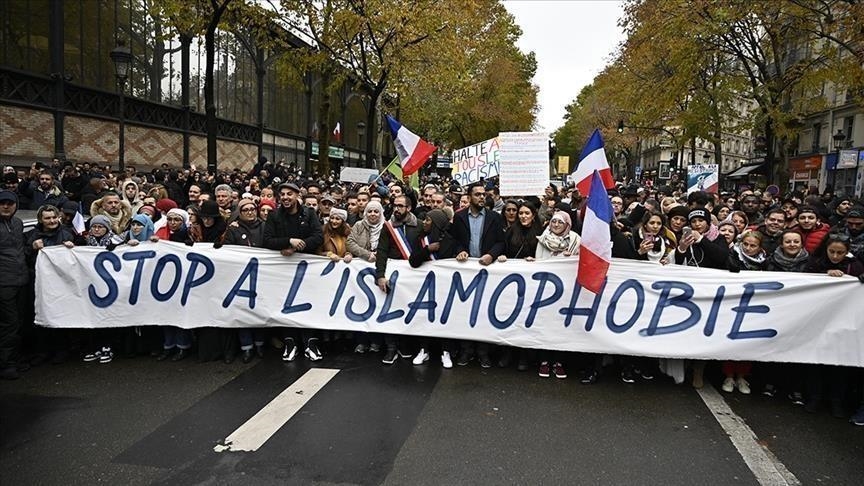
The French Council of the Muslim Faith (CFCM) has sharply criticized a new Ifop survey on Muslims in France, warning that the poll is reinforcing stigma at a time when Islamophobia is visibly rising in the country.
The council said the survey, commissioned by the magazine Ecran de veille, was introduced as “a snapshot of the relationship between Muslims in France and Islam and Islamism,” but in practice amounted to “yet another attempt to stigmatize French citizens of Muslim faith and their religious practices.”
At the center of the CFCM’s criticism is the poll’s methodology. The council argued that the survey contained “numerous methodological biases” that made its conclusions “approximate, erroneous, and lacking in scientific value.”
They pointed to inconsistent data, such as the claim that 35% of Muslims attend Friday prayers, an estimate the CFCM said does not align with the mosque capacity in France, which is under 500,000 people. Yet the poll suggests a figure closer to two million, an outcome the council described as incompatible with reality.
The CFCM also challenged the survey’s narrative that young Muslims are “more rigorous and more radical” than older generations. According to the council, this interpretation ignores well-documented response patterns: older Muslims often underreport religious practice, while younger respondents may overstate their religiosity “in reaction to a context of strong stigmatization.”
The council warned that findings like these are already being used by Islamophobic groups, stating that the poll has been “widely adopted and exploited by Islamophobic circles” seeking to portray Muslims as an “internal and existential threat.”
At the same time, the CFCM noted contradictions within the survey that undermine far-right narratives. One of the poll’s own data points shows that Muslims represent no more than 7% of the French population, a figure the council said “particularly undermine the ‘great replacement’ theory.”
Another area of concern is the poll’s framing of Muslim religious practices, including ritual slaughter. The CFCM rejected interpretations that suggest a conflict between French law and Islamic customs, emphasizing that ritual slaughter is “perfectly legal” and is practiced by both Muslims and Jews.
A Broader Climate of Islamophobia
The council’s denunciation comes amid a wider political and social environment where Muslims in France face mounting challenges. According to the provided data, France’s Muslim population are experiencing increasing restrictions since 2018. These include:
- The closure of over 1,000 Muslim institutions, including mosques and schools.
- Seizure of financial assets worth tens of millions of euros.
- Laws targeting religious expression, such as bans on headscarves and strict enforcement of laïcité in schools.
- Surveillance and policing of Muslim organizations under the pretext of combating “Islamist separatism.”
- Dissolution of Muslim civil society groups.
These developments have produced significant consequences, including marginalization, discrimination, and, for some families, a move out of France to seek better conditions for religious practice.
Islamophobic incidents have also risen sharply. A reported 75% increase in anti-Muslim acts in early 2025 prompted the creation of a joint observatory by the Paris Grand Mosque and Ifop to track such cases. Many Muslims report regular experiences with racism, exclusion, and employment discrimination.
In this climate, the CFCM has urged caution and responsibility in handling survey data on sensitive religious matters. They concluded with a reminder that misinterpreted or biased polling can deepen existing prejudices, saying the poll risks further fueling a societal environment where Muslims are misrepresented and targeted.
Their closing call was clear: interpretation of such surveys must be done carefully to avoid contributing to Islamophobia, especially when the methodology is flawed and the findings are vulnerable to misuse.
Copyright © AMT Inc. All rights reserved 2024.