
Exploring Religious and Cultural Tensions: Dogs as Pets Among American Muslims

In the diverse spectrum of Muslim beliefs, one topic that periodically resurfaces is the status of dogs in Islam.
While it's undeniable that the popularity of dogs as pets has surged significantly in recent years, especially in the U.S., there remain robust Muslim communities cautious about how to approach this trend. They're particularly concerned with instilling Islamic values in their children regarding the prohibition against keeping dogs as pets.
The reality is that there isn't a single definitive answer—various scholars hold different viewpoints.
Conservative clerics are holding firm in their opposition, referencing certain hadith (sayings of the Prophet Muhammad) to bolster their steadfast anti-dog stance. One hadith suggests that angels will not enter a home if a dog is present, while another warns that Muslims who keep dogs may forfeit some spiritual rewards from their good deeds.
An important concept frequently mentioned is "Najis," an Islamic legal term translating to "impure." Many Islamic teachers agree that the saliva of a dog is considered ritually impure. As a result, many Muslims believe that dogs cannot coexist in the same household as them.
However renowned scholar Shawki Allam has expressed support for the companionship of dogs, diverging from interpretations that consider dogs impure.
He asserts, "It is possible to coexist with a dog and still worship God." Drawing from the Maliki school of Islam, he argues that all living creatures are inherently pure.

Nevertheless, despite the varying viewpoints, acts of hatred and cruelty towards dogs persist in different regions. In 2022, in Qatar, a group of armed individuals attacked a secure facility used to feed and shelter stray dogs, resulting in the deaths of 29 dogs and injuries to others.
Similarly, reports of individual-level hostility towards stray dogs have emerged in the U.S. Instances of Muslim cab drivers refusing service to blind passengers with guide dogs are increasingly common, underscoring ongoing tensions and challenges surrounding the treatment of dogs within communities.
Insiders allege that the U.S. government has invested millions of dollars in training bomb-sniffing dogs crucial to the capabilities of federal and local law enforcement. However, some of these dogs are reportedly gifted to foreign countries where they face abuse. Among the nations implicated are Bahrain, Lebanon, Egypt, Indonesia, Morocco and Syria—all predominantly Muslim.
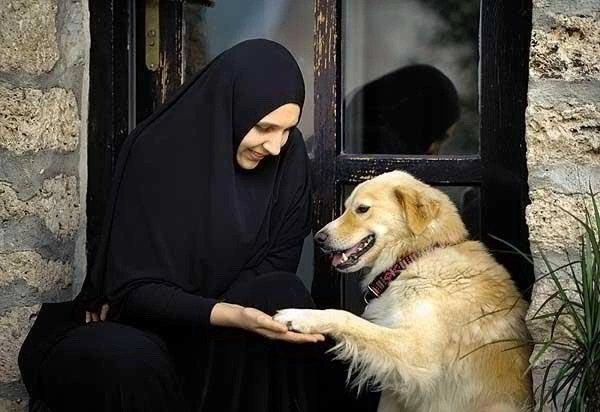
While several factors have contributed to dogs being an unpopular choice for pets in Muslim families, the perception seems to be shifting among American Muslims. In recent years, active campaigns have highlighted dogs as faithful companions, challenging the notion of their detestation within Islamic teachings.
Amal Hammoud, a resident of Dearborn, Michigan, resides with her husband, two children, and two beloved dogs, whom she regards as integral members of her family. Despite the warmth and companionship her pets bring, Amal has encountered disapproval from some members of the local Muslim community due to her ownership of dogs.
"I've had individuals express reluctance to visit because of the dogs, and we've received curious glances while out walking them," she shared. "Occasionally, people make comments in Arabic, unaware that we too are Arab. It can be amusing at times, but I believe some reactions are excessive."
Researchers have proven that pets offer significant biological benefits, such as reducing stress, lowering heart rates and blood pressure, and promoting physical activity. A recent study revealed that individuals over the age of 65 who own pets make 30 percent fewer visits to their doctors than those without pets.

It was reported in 2015 that in the U.S., there are an estimated 69.9 million dogs owned by households on an average day.
In 2023, 66% of American households, or 86.9 million homes, owned a pet. This is an 18% increase since 1988.
Although some American Muslims may have reservations about keeping dogs as pets, cats continue to be a favored choice. Recent years have witnessed a surge in the presence of felines in domestic settings.
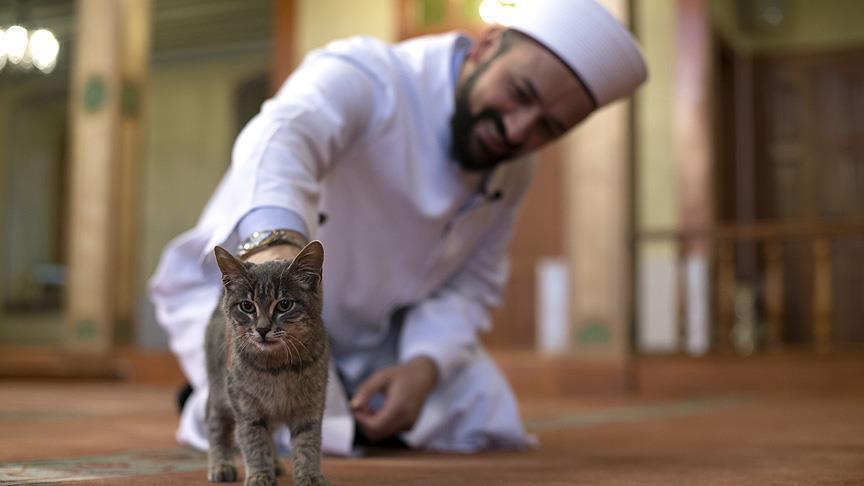
In Islam, cats are highly regarded. Imran Malik, a practicing Muslim and interfaith coordinator at the main campus of the Noor Islamic Cultural Center, explains that these feline companions enjoy special privileges compared to other pets due to their cleanliness. According to authentic narrations, it is permissible to perform ablution for prayer using water that a cat has drunk from, and one can even eat from the same bowl that a cat has used.
While dogs may not be the most favored choice of pets among Muslims in the States, a growing number of animal activists are passionately advocating for the belief that Islam unequivocally condemns any form of abuse towards them. This perspective is strongly supported by religious scriptures. As the Prophet Muhammad said, “There is a reward for serving any living thing.”
The real tragedy arises when certain Muslims continue to embrace such misguided perspectives in the name of Islam. This behavior fuels negative stereotypes about the religion.
The stark truth is that cruelty to animals by non-Muslims is often seen as individual actions, whereas similar behavior by Muslims is frequently misinterpreted as indicative of Islamic practices by non-Muslims.
Copyright © AMT Inc. All rights reserved 2024.