
Spain's First Ban on Public Muslim Celebrations Sparks National Outcry
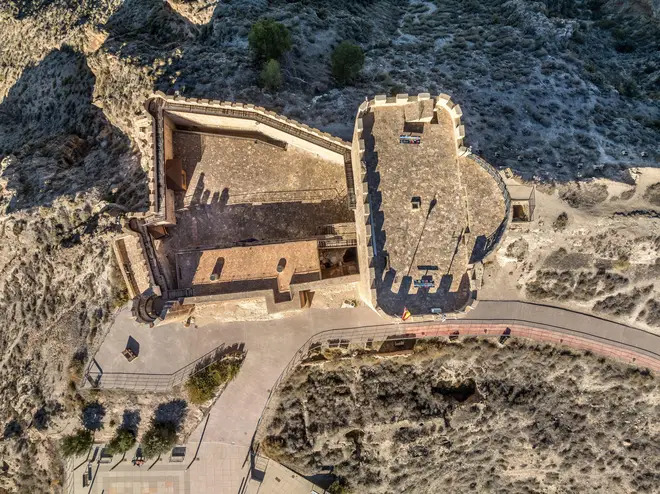
In a move widely condemned as discriminatory and unconstitutional, the Spanish town of Jumilla has become the first in the country to ban Muslims from celebrating Eid al-Fitr and Eid al-Adha in public facilities.
The decision has sparked nationwide outrage and reignited debates around religious freedom, identity politics, and Spain’s growing anti-migrant sentiment.
The ban, passed by the conservative People’s Party (PP) and supported through the abstention of the far-right Vox party, prohibits the use of municipal buildings such as sports halls and civic centers for any “religious, cultural or social activities alien to our identity” unless organized by local authorities.
 The motion was proposed by Spain's conservative People's Party (PP) and backed by the hard-right Vox party
The local Vox party took to X (formerly Twitter) to celebrate the measure,
“Thanks to Vox, the first measure to ban Islamic festivals in Spain’s public places has been passed. Spain is and will be forever the land of Christian people.”
Muslim leaders and human rights advocates were quick to respond. Mounir Benjelloun Andaloussi Azhari, president of the Spanish Federation of Islamic Religious Entities (FEERI), denounced the policy,
“They’re not going after other religions, they’re going after ours,” he told El Pais, calling the move “Islamophobic and discriminatory.”
“We’re rather surprised by what’s happening in Spain. For the first time in 30 years I feel afraid.”
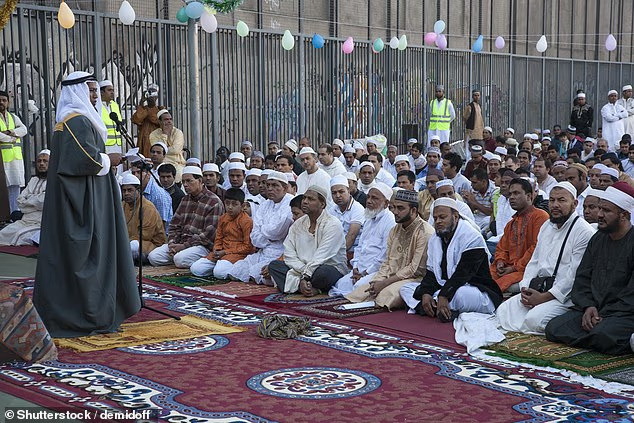 A town in Spain has prohibited Muslims from using public spaces to hold celebrations for their religious festivals
The ban, seen by many as a targeted attack on the Muslim community, affects roughly 7.5% of Jumilla’s population, people originally from predominantly Muslim countries.
Critics argue it contradicts Article 16 of the Spanish Constitution, which guarantees freedom of religion and worship, with restrictions only applicable when necessary for public order.
Francisco Lucas, leader of the Socialist Party (PSOE) in Murcia, echoed these concerns, “The PP violates the constitution and puts social cohesion at risk simply in the pursuit of power.”
Juana Guardiola, the town's former Socialist mayor, challenged the premise of the ban, “What do they mean by identity? And what about the centuries of Muslim legacy here?”
Jumilla, once known as Yumil-la, was part of the Roman Empire before falling under Muslim rule in the 8th century. It remained largely Arab until the 13th century when Christian troops led by Alfonso X of Castile took control—breaking a prior agreement to protect the rights of its Arab inhabitants.
The ban follows closely on the heels of anti-migrant violence just 70 miles away in Torre Pacheco. On July 9, a 68-year-old Spanish pensioner was reportedly attacked by three Moroccan men, sparking riots that lasted several days.
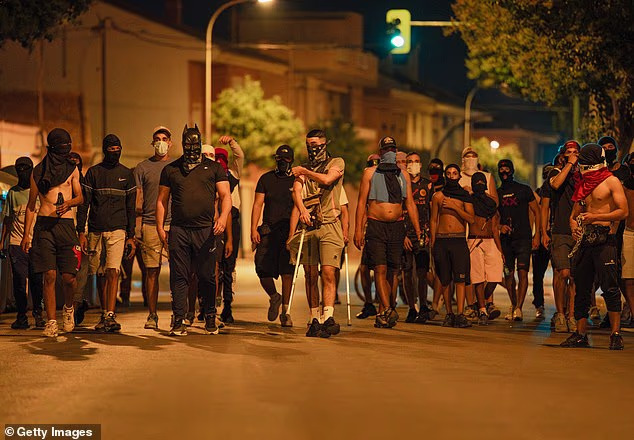 Anti-migrant protests in Spain
Armed groups roamed the streets “hunting” migrants, prompting authorities to deploy nearly 100 additional police officers. Peaceful demonstrations were hijacked by anti-migrant protesters, and social media posts revealed calls for an organized “hunt for migrants.”
The timing and language of the Jumilla ban have led many to believe the move is politically motivated, exploiting recent unrest to justify exclusionary policies. Legal experts have suggested that the measure could face constitutional challenges in court.
While Jumilla's town council frames the ban as a way to protect local identity, for many, it signals a disturbing shift in Spain’s political landscape, one where far-right narratives gain traction and minority communities are pushed further to the margins.
Copyright © AMT Inc. All rights reserved 2024.